Sundas Journal
International Thalassemia Day 2026 - Sundas Foundation
- Author
- Sundas Foundation
- Published
- 5 May 2026
- Read time
- 6 min read
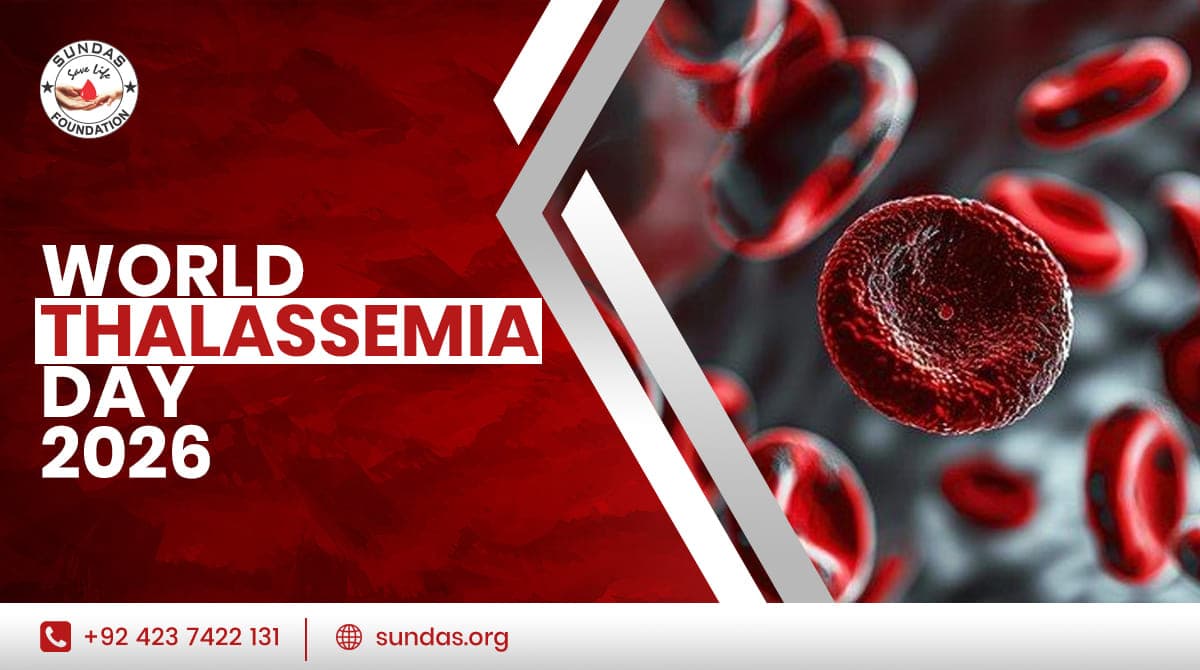
Every year on May 8, International Thalassemia Day is observed. The day brings the global community together to raise awareness, honor people living with thalassemia, remember those who have lost their lives, and call for stronger action in prevention, diagnosis, and care.
In 2026, the official theme is “Hidden No More: Finding the Undiagnosed. Supporting the Unseen.” This message highlights a deeply important reality that many people with thalassemia remain undiagnosed, unsupported, or overlooked within healthcare systems and society.
Today, we will discuss everything related to Thalassemia, including its causes, symptoms, diagnostic options, and treatment opportunities. The core reason behind this discussion is to make people aware of everything about Thalassemia. This is the awareness that can help us not only avoid the disease, but also bring possible solutions to relieve those who are suffering from the condition. So, let’s begin this awareness campaign now!
Why Does Thalassemia Awareness Matter?
International Thalassemia Day 2026 is not only about spreading awareness, but it is also about visibility, early screening, timely diagnosis, equal access to treatment, and emotional support for patients and families. This year’s theme reminds us that no person living with thalassemia should remain hidden, unheard, or unsupported. Through education, community participation, genetic counseling, blood donation awareness, and stronger healthcare policies, we can help create a future where thalassemia is detected earlier, managed better, and understood with greater compassion.
What is Thalassemia?
Thalassemia is an inherited blood disorder in which the body does not make enough healthy hemoglobin (the protein in red blood cells that carries oxygen throughout the body). Depending on the type and severity, it can cause lifelong anemia, fatigue, weakness, delayed growth, and serious health complications. For many patients, treatment may involve regular blood transfusions, iron chelation therapy, and continuous medical follow-up.
Types of Thalassemia
Thalassemia has two main types: alpha thalassemia and beta thalassemia. The type depends on which hemoglobin protein chain the body cannot make properly.
Alpha Thalassemia
Alpha thalassemia happens when the body does not make enough alpha-globin protein. It can range from no symptoms to severe anemia. Common forms include silent carrier, alpha thalassemia trait, Hemoglobin H disease, and alpha thalassemia major.
Beta Thalassemia
Beta thalassemia happens when the body does not make enough beta-globin protein. It can be mild, moderate, or severe. Common forms include beta thalassemia minor, beta thalassemia intermedia, and beta thalassemia major.
Common Causes of Thalassemia
Thalassemia is mainly caused by inherited gene changes passed from parents to children. These gene changes affect how the body makes hemoglobin. When the body cannot make enough normal hemoglobin, red blood cells are fewer, weaker, and less effective, which can lead to anemia. The most common causes include:
- Inherited Gene Mutations: Thalassemia occurs when a child inherits altered or missing genes that control hemoglobin production. These changes affect either alpha-globin or beta-globin chains, which are important parts of hemoglobin.
- Family History: A person has a higher chance of having thalassemia if one or both parents carry the thalassemia gene. Parents may look healthy and still pass the gene to their children, especially if they have thalassemia trait or minor.
- Carrier Parents: If both parents are carriers, their child has a higher risk of developing a more serious form of thalassemia. This is why premarital screening, genetic counseling, and early testing are very important in families with a history of the condition.
- Alpha or Beta Globin Gene Problems: Alpha thalassemia develops when the body cannot make enough alpha-globin protein. Beta thalassemia develops when the body cannot make enough beta-globin protein. The severity depends on how many affected genes a person inherits and how strongly those genes reduce hemoglobin production.
- Ethnic and Regional Background: Thalassemia is more common in people with family origins from the Mediterranean, Middle East, South Asia, Southeast Asia, and parts of Africa. However, it can affect people from any background.
Common Symptoms of Thalassemia
Thalassemia symptoms can be mild or severe, depending on the type and hemoglobin level. Common symptoms of thalassemia include:
- Patients may feel fatigue and weakness
- Your skin turned pale or yellowish in color
- A person may feel breathless, especially during physical activity.
- Children with more severe thalassemia may grow more slowly than expected.
- Some people may notice dark-colored urine
- Severe thalassemia can affect bone health.
- The spleen may become enlarged because it works harder to remove damaged red blood cells.
- Some people with thalassemia may become more prone to infections
How to Diagnose Thalassemia?
Thalassemia is diagnosed through blood tests and sometimes genetic testing. Doctors usually start with a complete blood count to check hemoglobin levels, red blood cell count, and red blood cell size. Common tests include:
- Complete blood count to detect anemia and small red blood cells
- Blood smear to examine the shape and appearance of red blood cells
- Iron studies to rule out iron-deficiency anemia
- Hemoglobin electrophoresis to check abnormal hemoglobin types
- Genetic testing to confirm the type of thalassemia or carrier status
- Prenatal testing for families with a known risk
What are the Treatment Plans for Thalassemia?
Treatment depends on the type and severity of thalassemia. Mild cases may need little or no treatment, while severe cases need regular care. Common treatment options include:
- Regular blood transfusions
- Iron chelation therapy to remove extra iron
- Folic acid supplements
- Bone marrow or stem cell transplant in selected cases
- Regular checkups and supportive care
- Heart and liver monitoring
- Infection prevention
- Care from a blood specialist
What does Sundas Foundation do for Thalassemia Patients?
At Sundas Foundation, we support thalassemia patients by providing free blood transfusions, treatment, and medical care. Many thalassemia patients need regular blood to survive, and the foundation helps make this care accessible. The foundation also supports patients with hemophilia and other blood disorders. It provides safe blood, medicines, and long-term care to patients who cannot afford expensive treatment.
What Contributions Can You Make to Save Thalassemia Patients?
You can help thalassemia patients by donating blood regularly. A single blood donation can support patients who depend on transfusions every few weeks. You can also donate Zakat, Sadaqah, or general charity to help cover treatment, medicines, and transfusion costs. Your financial support can reduce the burden on families.
Frequently Asked Questions
When is World Thalassemia Day observed?
World Thalassemia Day is observed every year on May 8 to raise awareness about thalassemia and support patients worldwide.
What is the theme of World Thalassemia Day 2026?
The theme for World Thalassemia Day 2026 is “Hidden No More: Finding the Undiagnosed. Supporting the Unseen.”
Is thalassemia an inherited disease?
Yes, thalassemia is a genetic blood disorder passed from parents to children through affected genes.
Can thalassemia be cured?
In some cases, a bone marrow or stem cell transplant may cure thalassemia. However, many patients manage it with regular treatment.
What does Sundas Foundation do for patients?
Sundas Foundation provides free blood transfusions, treatment support, medicines, and care for thalassemia and other blood disorder patients.

Written by Sundas Foundation
A non-profit established in 1998 and registered with the Punjab Charity Commission, dedicated to free, round-the-clock care for patients with Thalassemia, Hemophilia and other blood disorders at 12 centers across Pakistan.